Penetration Testing Guide 2026: Complete Roadmap
In 2026, cyberattacks have become smarter, faster, and more destructive than ever before. From AI-powered phishing to ransomware-as-a-service, organizations face threats that traditional defenses can't stop. This is where penetration testing becomes critical.
Penetration testing — or "pentesting" — is the practice of simulating real-world cyberattacks on systems, networks, and applications to discover vulnerabilities before malicious hackers do.
In this complete Penetration Testing Guide 2026, you'll learn:
- What penetration testing is and why it matters
- Types of pentesting and methodologies
- Top tools used by ethical hackers
- Step-by-step pentesting roadmap
- Certifications to boost your career
- Real-world examples and best practices
Whether you're a beginner or an aspiring red teamer, this guide will give you a clear path to mastering offensive security in 2026.

1. What is Penetration Testing?
Penetration testing is an authorized, simulated cyberattack performed on a computer system to evaluate its security. The goal is to identify weaknesses (vulnerabilities) — including the potential for unauthorized parties to gain access to the system's features and data.
Unlike vulnerability scanning (which only finds weaknesses), pentesting goes further by actively exploiting those weaknesses to measure real-world impact.
Why Penetration Testing Matters in 2026
- Cybercrime damages are projected to exceed $12 trillion globally in 2026
- Regulatory frameworks (GDPR, HIPAA, PCI-DSS) require regular pentests
- AI-driven attacks need AI-aware defense testing
- The average cost of a data breach is now $5.2 million
2. Types of Penetration Testing
There are several types of pentests, each designed for a specific purpose:
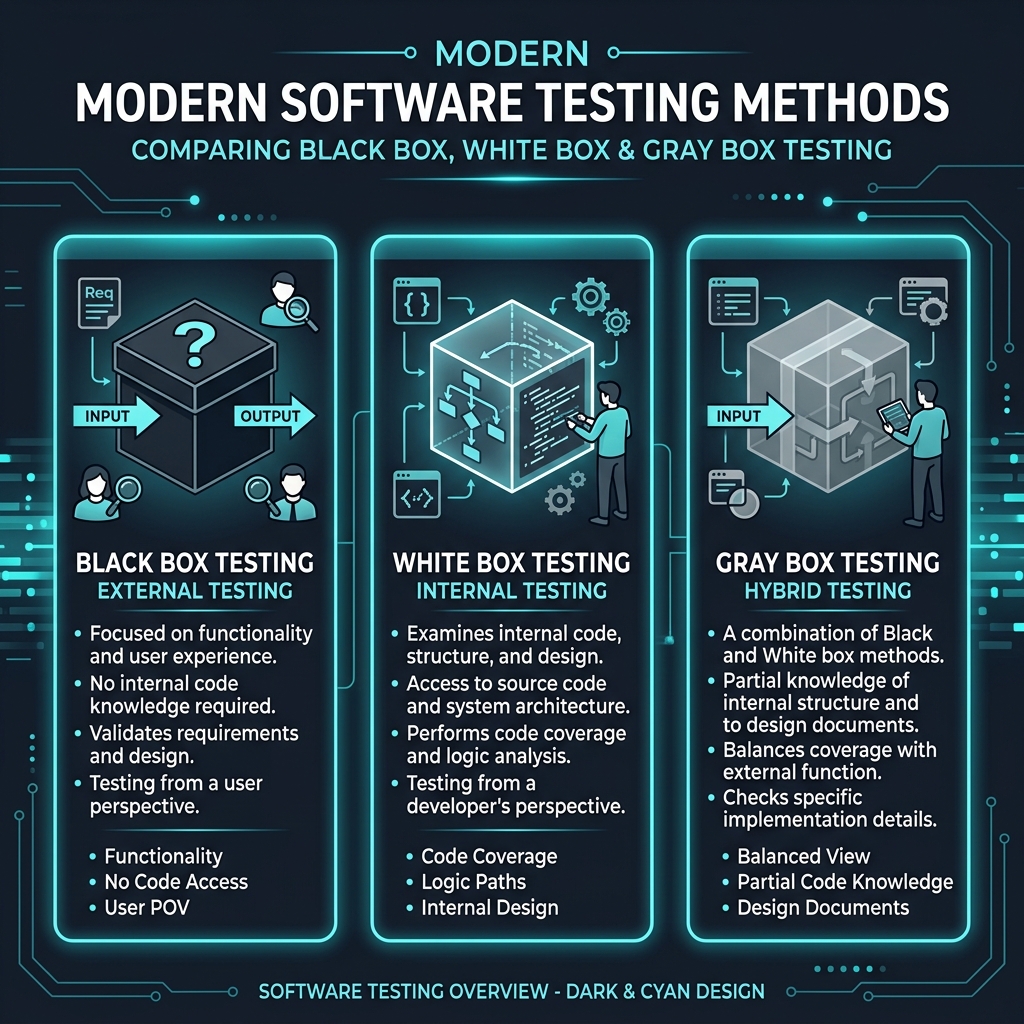
Black Box Testing
The tester has no prior knowledge of the target. Simulates a real external attacker.
White Box Testing
The tester has full access to source code, architecture, and credentials. Best for deep internal audits.
Gray Box Testing
A mix of both — the tester has partial knowledge. Most common in real engagements.
Other Assessment Targets
- Network Penetration Testing: Targets servers, firewalls, routers, and network protocols.
- Web Application Pentesting: Focused on OWASP Top 10 vulnerabilities like XSS, SQLi, and SSRF.
- Mobile Application Pentesting: Tests Android and iOS apps for insecure storage, weak APIs, and reverse engineering risks.
- Cloud Penetration Testing: Assesses AWS, Azure, and GCP environments — misconfigurations, IAM flaws, and exposed buckets.
- Social Engineering Pentesting: Tests human weaknesses through phishing, vishing, and physical intrusion.
3. Penetration Testing Methodologies (2026 Standards)
Professional pentesters follow industry-standard methodologies to guarantee thorough coverage:
- PTES (Penetration Testing Execution Standard): The most widely adopted framework with 7 phases.
- OWASP Testing Guide: Best for web application testing and code reviews.
- NIST SP 800-115: Government and enterprise-grade standard for overall security assessments.
- OSSTMM: A scientific and quantifiable approach to operational security testing.
- MITRE ATT&CK Framework: The gold standard for adversary emulation and mapping red-team attacks to known threat-group behaviors in 2026.
4. The 7-Phase Penetration Testing Roadmap
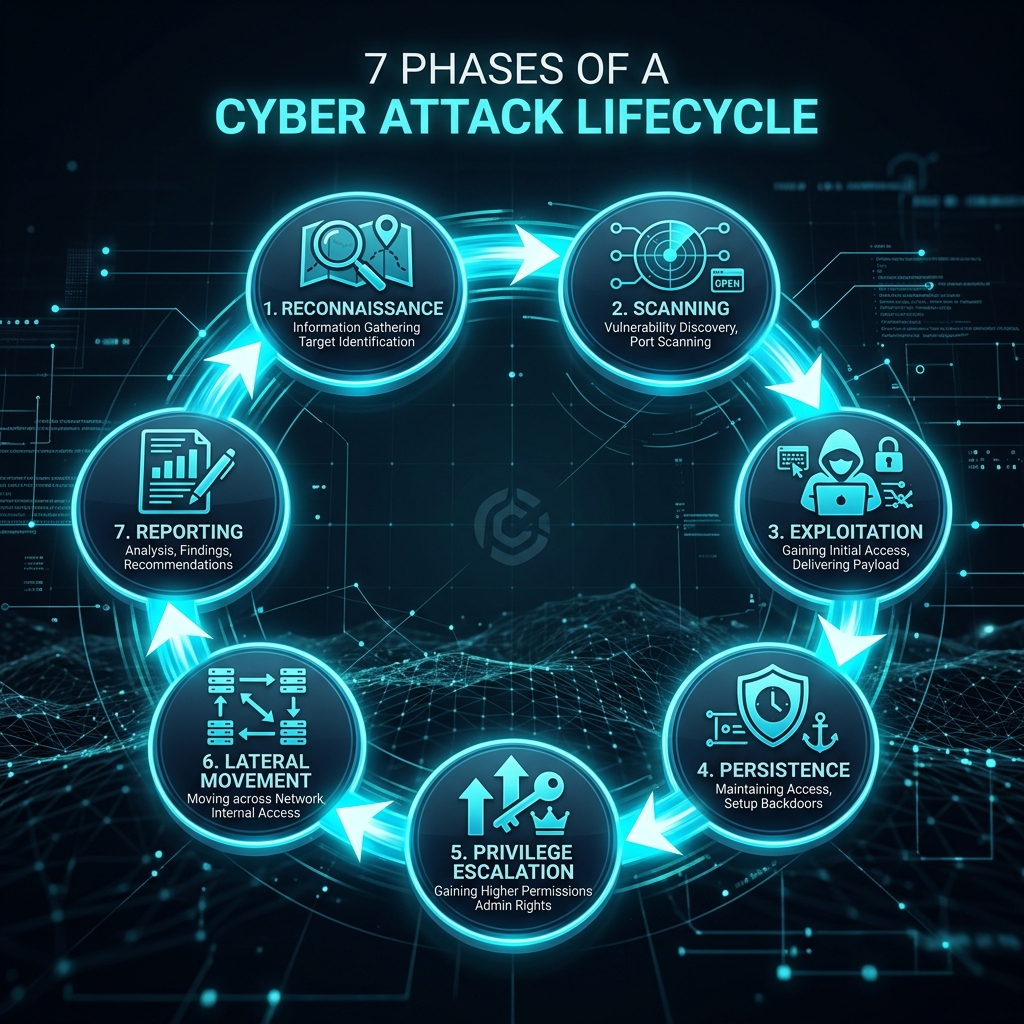
Every professional penetration test flows through these 7 standard phases:
Reconnaissance
Gather intelligence on the target system using OSINT tools.
Tools: Maltego, theHarvester, Shodan, Recon-ng, Google Dorks
Scanning & Enumeration
Identify live hosts, active ports, services, and software vulnerability versions.
Tools: Nmap, Masscan, Nessus, Nikto, Nuclei
Gaining Access (Exploitation)
Actively compromise vulnerabilities to breach the network perimeter.
Tools: Metasploit, SQLmap, Burp Suite, Cobalt Strike
Maintaining Access (Persistence)
Set up backdoors or remote control access channels to avoid losing connection.
Tools: Empire, Mimikatz, Sliver, Havoc
Privilege Escalation
Find local configuration flaws to escalate a standard user account to admin/root.
Tools: LinPEAS, WinPEAS, BloodHound, PowerUp
Lateral Movement
Pivot from the initial compromised node across the network to secure other targets.
Tools: Impacket, CrackMapExec, Evil-WinRM
Reporting
Provide complete vulnerability logs, proof-of-concept steps, and remediation advice.
Tools: Dradis, PlexTrac, Serpico
5. Top 15 Penetration Testing Tools in 2026
Offensive operations rely on a modern toolkit. Here is a list of the top 15 tools used in 2026:
| # | Tool Name | Primary Category |
|---|---|---|
| 1 | Kali Linux | Pentesting OS |
| 2 | Nmap | Network scanning |
| 3 | Burp Suite Pro | Web app testing |
| 4 | Metasploit | Exploitation framework |
| 5 | Wireshark | Network analysis |
| 6 | SQLmap | SQL injection automation |
| 7 | Nuclei | Vulnerability scanning |
| 8 | BloodHound | Active Directory attack paths |
| 9 | Mimikatz | Credential dumping |
| 10 | Hashcat | Password cracking |
| 11 | Cobalt Strike | Red team operations |
| 12 | Sliver | Open-source C2 |
| 13 | Havoc | Modern C2 framework |
| 14 | Caido | Modern Burp alternative |
| 15 | PingCastle | Active Directory audit |
6. Top Certifications for Pentesters in 2026
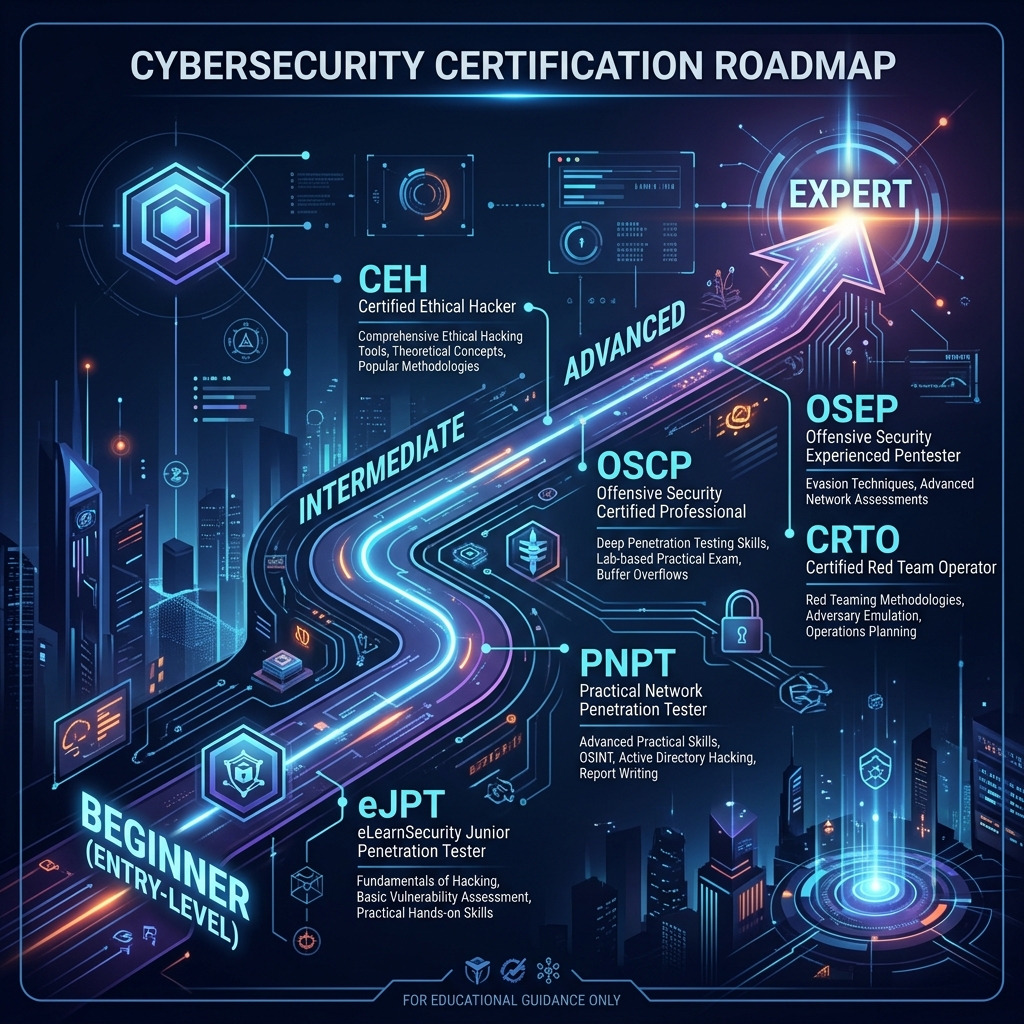
Certifications establish professional credibility and provide structured learning maps.
Foundations
eJPT, CompTIA PenTest+, and Certified Ethical Hacker (CEH).
Core Competency
OSCP (OffSec Certified Professional), CRTP, and PNPT.
Specialization
OSEP, OSWE, and Certified Red Team Operator (CRTO).
Salary Insight (2026 averages)
- • Junior Pentester: $65K – $90K
- • Mid-Level Pentester: $95K – $130K
- • Senior Red Teamer: $150K – $220K+
7. Building Your Pentest Lab (Free Setup)
Practice is everything in cybersecurity. Build your local lab environment using these free resources:
- Virtualization: VirtualBox or VMware Workstation Player to run VMs safely.
- Attacker Machine: Kali Linux or Parrot OS (packed with default tools).
- Vulnerable VM targets: Metasploitable 2 or Metasploitable 3.
- Web App practice: DVWA (Damn Vulnerable Web App), OWASP Juice Shop, or bWAPP.
- AD Environment: GOAD (Game of Active Directory) to practice domain attacks.
- Online Laboratories: TryHackMe, HackTheBox, and PortSwigger Web Security Academy.
8. Best Practices for Ethical Pentesters
- Always get written authorization before executing any security tests.
- Define a clear scope and rules of engagement (RoE) to avoid legal issues.
- Use safe exploits that demonstrate vulnerability without destroying database production tables.
- Keep detailed, encrypted command logs of every tool run.
- Provide actionable, step-by-step remediation advice inside your reports.
- Follow responsible disclosure paths for zero-day vulnerabilities.
9. Common Mistakes Beginners Make
- Skipping Reconnaissance: Rushing straight into exploitation without gathering solid host profile intelligence.
- Noisy Scans on Production: Running high-intensity scans that overload production databases and trigger denial-of-service alerts.
- Automated Scanner Reliance: Believing a tool scanner report covers everything, missing logic and auth bypass flaws.
- Ignoring Report Writing: Treating the report as an afterthought, when it is the main product of the assessment.
- Not Staying Updated: Missing new exploit concepts or CVE disclosures.
10. The Future of Penetration Testing (2026 & Beyond)
The industry is transitioning toward more continuous and automated paradigms:
- AI-powered Pentesting: Tools like PentestGPT and AutoGPT are automating passive reconnaissance and script execution.
- Cloud-Native Attack Surfaces: Escalated focus on container escapes, Kubernetes configs, and Infrastructure-as-Code (IaC) misconfigurations.
- PTaaS (Penetration Testing as a Service): The replacement of static annual testing with continuous testing integrations.
- Adversary Emulation: Mimicking real APT groups using frameworks mapped directly to MITRE ATT&CK.
Conclusion
Penetration testing in 2026 is no longer optional — it's a business necessity. Whether you're protecting an enterprise or building a career as an ethical hacker, mastering pentesting opens doors to one of the most exciting fields in cybersecurity.
Start with the basics, build your lab, get certified, and never stop learning. The attackers don't sleep — and neither should your skills.
Frequently Asked Questions (FAQ)
About the Authors
Written by the Hackers in Threat Hunt Team. We are a collaborative force of certified ethical hackers (OSCP, eWPTX, PNPT) specializing in network penetration testing, application security audits, and threat emulation. Our goal is to secure enterprise infrastructure by hacking it first.